
Why we shouldn’t wait to segregate!

There exists such pattern of things,
Everywhere and around,
Life places the call,
and all things serve its round.
We watch in the scene,
As nature draws her lessons,
Red, orange, yellow, green…
Next to another like recycle bins,
Who says we're not in order?
I'm not called to draw sketches in the sky,
or a fence for the floods;
I just should teach my lazy heart,
how to keep the waste apart.
Yes! Our lives need order,
So we discard and declutter,
Who says I'm not decent?
But if I dispose of this order too,
What then have I learnt?
Remember? When you had to go to the bin that morning after you've searched everywhere for your micro-SIM or the earring hook? How did filtering through all that pile feel?
Now, imagine if all of the food waste had been kept in a separate bin before then. Interestingly, that would have made a great difference. And you guessed right, that’s what this post is about!
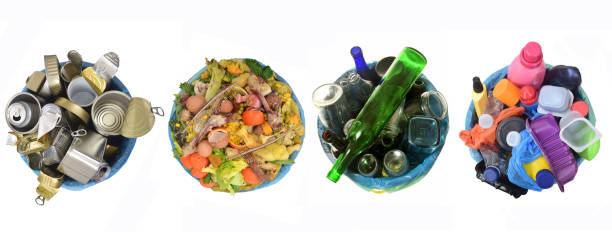
The need to sort our waste is important and very timely too. In the populous city of Lagos where I live, a whopping 10,000 tonnes of waste is generated from homes, schools, and other places each day.
Yes! that much, and it’s bad news to know that all these big numbers have to go into landfills and dumpsites when tons of it could have been reused.
It is even more heartbreaking to see people empty their home trash into the drains and toss their candy wraps along sidewalks, then you just wonder where they expect the waste to end up.

What a waste!
Studies show that only about 37% of the city's waste is collected; this implies that the other over 60% float in our canals, lie at street corners, or make their way to large water bodies. What a waste!
In the community where I work, I see the impact first hand as floods drift livelihoods and worsen our daily transit experience. That might be an environmental problem but the poor waste decisions of the community certainly contribute to their drainages becoming blocked channels that do not allow the flow of stormwater after heavy downpours.
"Our trash doesn't disappear; it goes somewhere and affects someone." - Lilygol Sedaghat
In your own community, you would observe at different times of the day, at street ends and corners, waste pickers going through the dumped trash and sorting out valuable metals they need. Asides the socio-economic challenges they face, this also goes to point out that our disposed items shouldn't have been discarded all together in the manner that they were.

Today, few of us are bothered about this subject and that's a problem in itself because where there are no worries, there's no burden and hence, no action.
We wish the appropriate authorities share our worry, and that we the citizens too become more responsible for the cleanliness of where we live, travel and work.
It's no story even to young children that an improved waste culture will greatly enhance our health and safety, one source at a time.
Rethinking our waste cultures.
A fact remains that the idea and practice of keeping different waste types apart from each other is still very foreign to the average Nigerian home. This is because already there exists a pretty bad notion about waste and how unattractive it is painted.
Our ideas about waste need to change. It may just be a biscuit wrapper/nylon but then, it can be more!
Treat waste better, and live healthier lives.
Segregating our waste is a great way to say we're ready for a healthier place to live today, and essentially for a greener tomorrow. It is the first and most important step towards solving the problem the world’s cities face today with trash.

Our waste - metals, plastics, glass, paper - need to be valued more today as they are in high demand by industries, and we shouldn't just stock them up in a pile or devalue them. Ideas like crafts from plastic cans speak volumes of how we can rethink, reuse and reduce.
We can sort these items by allowing for separate bins or simply letting dry waste stay away from moist ones. This way, what is dry stays dry and can easily be reused, and the moist waste can be treated accordingly too.
This will in many ways greatly increase the chances of recycling in our times. It's simple logic that if we sorted our waste from homes, offices, and drop-points, a circular economy will be more realistic and achievable.
You might have that question inside saying “What do I stand to gain if I sort my waste?”
Well, asides the given reasons, requesting that we are a bit more decent and civilized shouldn’t be too much to ask.
Sorting at homes, offices, parks, and schools drastically reduces the amount of recyclables that we let go to waste, and that's good news for our communities too.
Our daily activities as humans negatively affect the environment considerably that more strain will only diminish the chances of us living healthier lives.
So, what are you waiting for?
Kindly make it known by spreading the word to your friends and family.
Never let another friend litter next to you.
Begin today to segregate that pile in the simplest way you can.
Most of all, be happy that you're making a difference!


First off I'm glad many more people are waking up to this reality. Truth bethold I'm tired of eating outside and having to put the wraps and stuff in my pocket or bag. People just laugh at me and I laugh back. The first thing I do when I get home is empty my pockets. But still I'm not satisfied because while I might not have littered, I definitely still am not sure what happens to the trash when I dispose it in a trash can. At home I burn anything that can be burnt. I'm still contributing to global warming, but I feel better than knowing it's just put there floating around. And for the metals I let th…